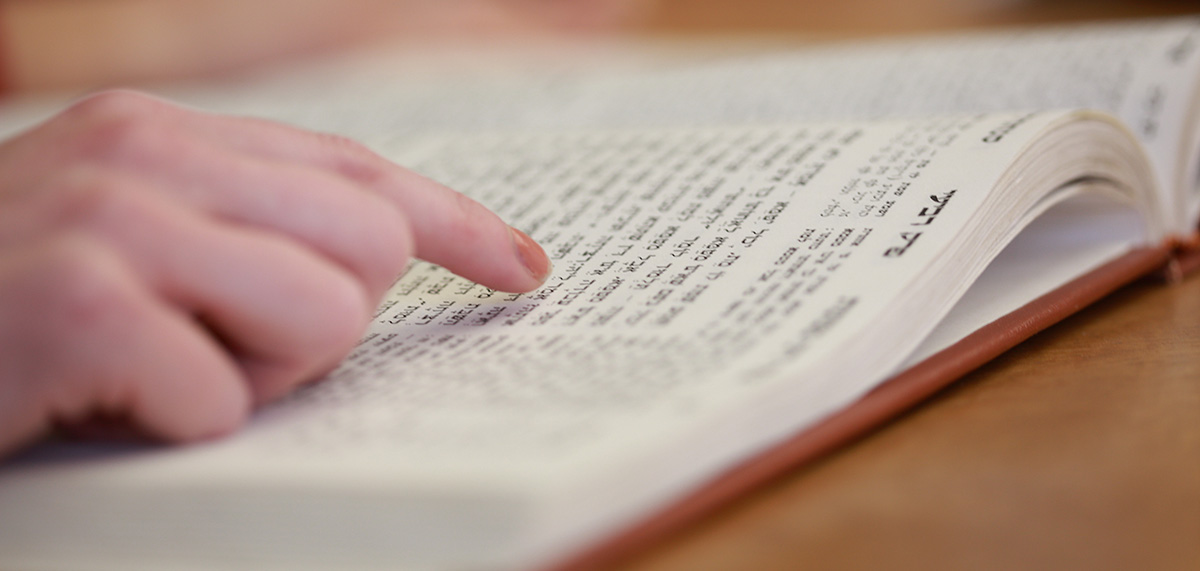
Explore JTS’s Online Torah

We invite you to search our vast collection of today’s most compelling Jewish conversations, teaching, and resources, including weekly Torah commentaries, online lectures, curricula for community use, and more.

Use the search bar and filters to find what inspires you.

Read weekly Torah commentaries

Read weekly Torah commentaries

Reflections on the Torah reading cycle

Learn more
Holiday Learning and Resources

Holiday Learning and Resources

Commentaries and more on the themes, texts, and liturgy of the holidays.

Learn more
Join online classes

Join online classes

Live series with JTS teachers

Learn more

Listen to JTS podcasts

Listen to JTS podcasts

Learn on the go

Learn more
Watch lecture recordings

Watch lecture recordings

Videos of public events

Learn more
Nusah & Cantillation

Nusah & Cantillation

The tunes for Shabbat, festival, and high holiday services and Torah readings

Learn more

Featured

The Give and Take of Strength

The Give and Take of Strength

Mar 13, 2026 By Eliezer B. Diamond z”l | Commentary | Pekudei | Shabbat Hahodesh | Vayak-hel

Rituals of closure are common in both the secular and religious realms. An example of the first is the sounding of retreat and the lowering of the flag marking the end of the official duty day on military installations. An instance of the second is the siyyum, a liturgical ritual and festive meal that is occasioned by the completion of the study of a Talmudic tractate. Closure rituals relate not only to the past but to the future as well. On the one hand, the temporal demarcation of a past event facilitates the emergence of its distinct identity, internal coherence, and significance, thereby providing insight, understanding, and, at times, a sense of accomplishment. At the same time, by declaring an end, a closure ritual creates space in which one can—and must—begin anew; the past is to be neither prison nor refuge.

Read More
Seasons of Reckoning: The Practice of Moral Accounting

Seasons of Reckoning: The Practice of Moral Accounting

Mar 9, 2026

Sources | Presentation From our Learning Series: Seasons of ResponsibilityJoin us for a timely conversation co-sponsored by the Center for Earth Ethics at Union Theological Seminary. Featuring Karenna Gore and Rabbi Burton L. Visotzky, this program explores how traditions of moral reflection can guide us.In partnership with the Center for Earth Ethics About the Speaker […]

Read More
Kept By Shabbat

Kept By Shabbat

Mar 6, 2026 By Amy Kalmanofsky | Commentary | Ki Tissa

Ahad Ha’am famously said: “More than Jews have kept Shabbat, Shabbat has kept the Jews.” Pretty remarkable coming from the founder of cultural Zionism!

Parashat Ki Tissa either supports or challenges Ha’am’s words. This week’s parashah relates one of the lowest moments in Israel’s story—the sin of the golden calf—in which Israel dances before a god of their own making. Coming down Mount Sinai with the stone tablets inscribed by God’s finger (Exod. 31:18), Moses sees Israel’s frenzy and smashes the tablets. Moses spends the rest of the parashah picking up the pieces and working to restore Israel’s relationship with God. The parashah ends with God giving a new set of tablets to Moses. The holy covenant between God and Israel is restored.

Read More
Zakhor in a Fractured Age

Zakhor in a Fractured Age

Feb 27, 2026 By Sandra Fox | Commentary | Shabbat Zakhor | Tetzavveh

“Could you have chosen a more loaded week?” said my husband with a face that can only be described as both bemused and pitying when I told him that I had agreed to write my first JTS Torah Commentary on Shabbat Zakhor. As the heaviness of the reading sank in, with its commandment to recall Amalek’s unprovoked attack on the Israelites and to “blot out” Amalek’s memory, I became apprehensive.

Read More
A Symbol of Peace

A Symbol of Peace

Feb 20, 2026 By Daniel Nevins | Commentary | Terumah

The Arch of Titus in Rome is simultaneously one of the saddest and most exciting places for a Jew to stand. It is but a short distance from the Colosseum, the stadium made famous by its cruel sports, built with money plundered from the Jerusalem Temple in 70 CE. Titus’s Arch celebrates the destruction of our Temple, a building designated by Isaiah to be a house of prayer for all nations. A bas-relief sculpture on the arch’s inner walls depicts a sickening scene: the triumphant display of the Temple’s sacred objects, the Menorah most prominent among them, along with a pathetic procession of enslaved Jews.

Read More

SUBSCRIBE TO TORAH FROM JTS

Our regular commentaries and videos are a great way to stay intellectually and spiritually engaged with Jewish thought and wisdom.